The Indigo Pavilion (for The Triumph of Art)
The National Gallery, Trafalgar Square London
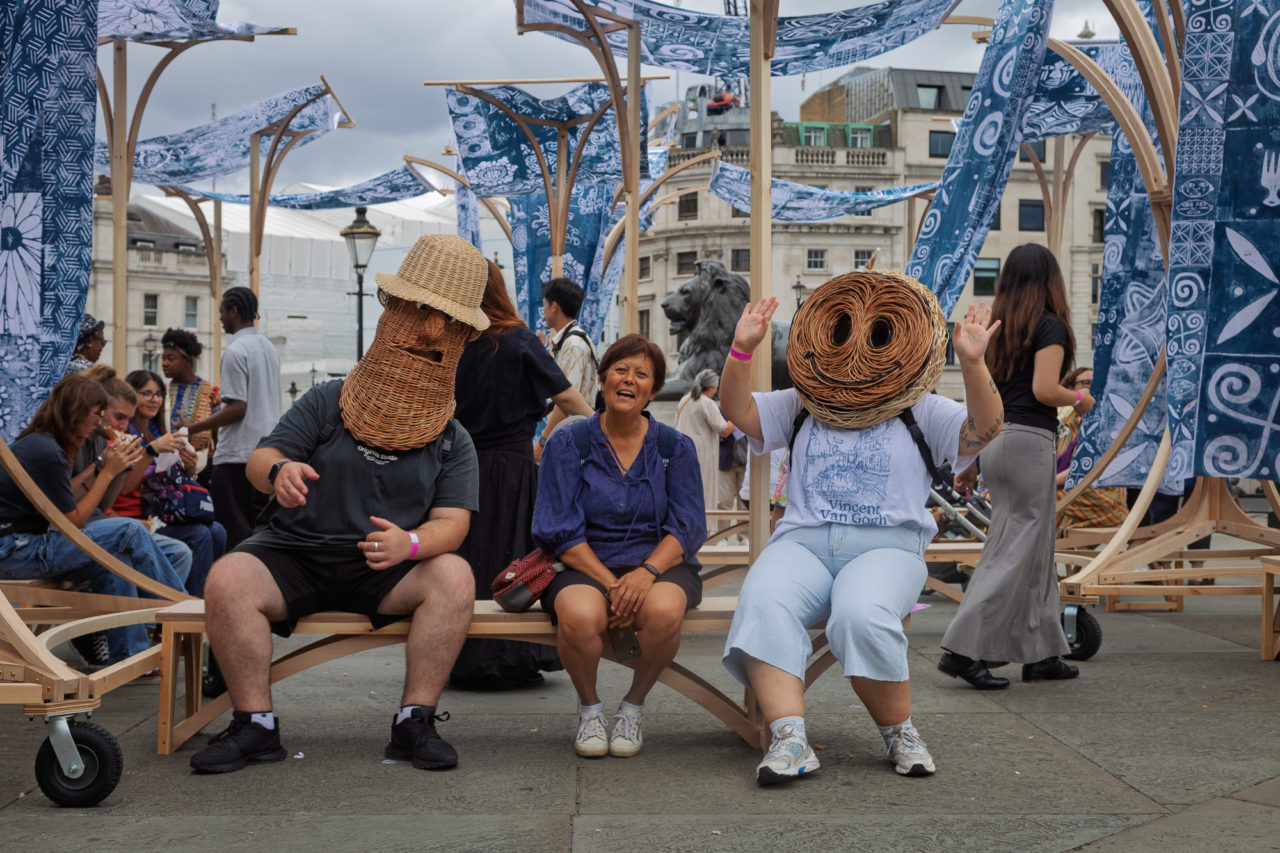
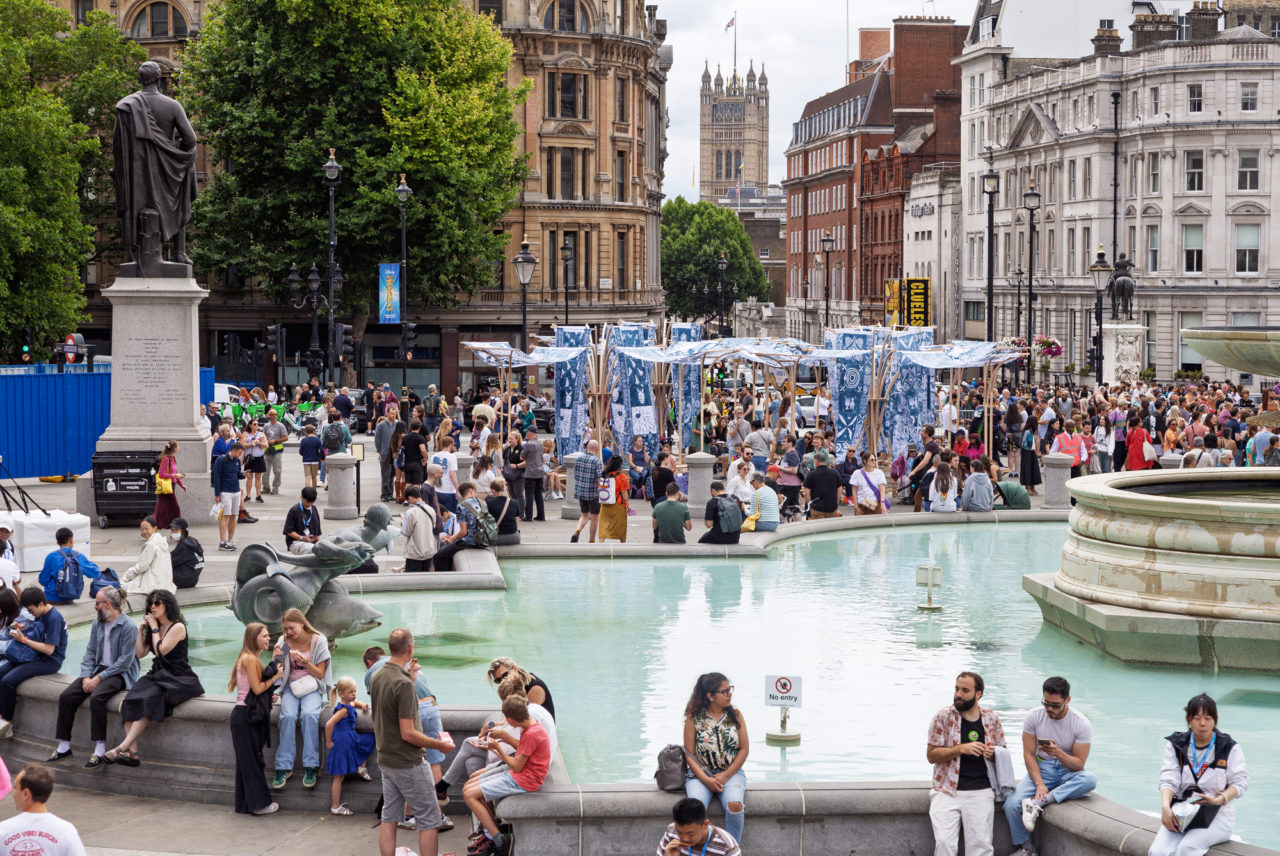
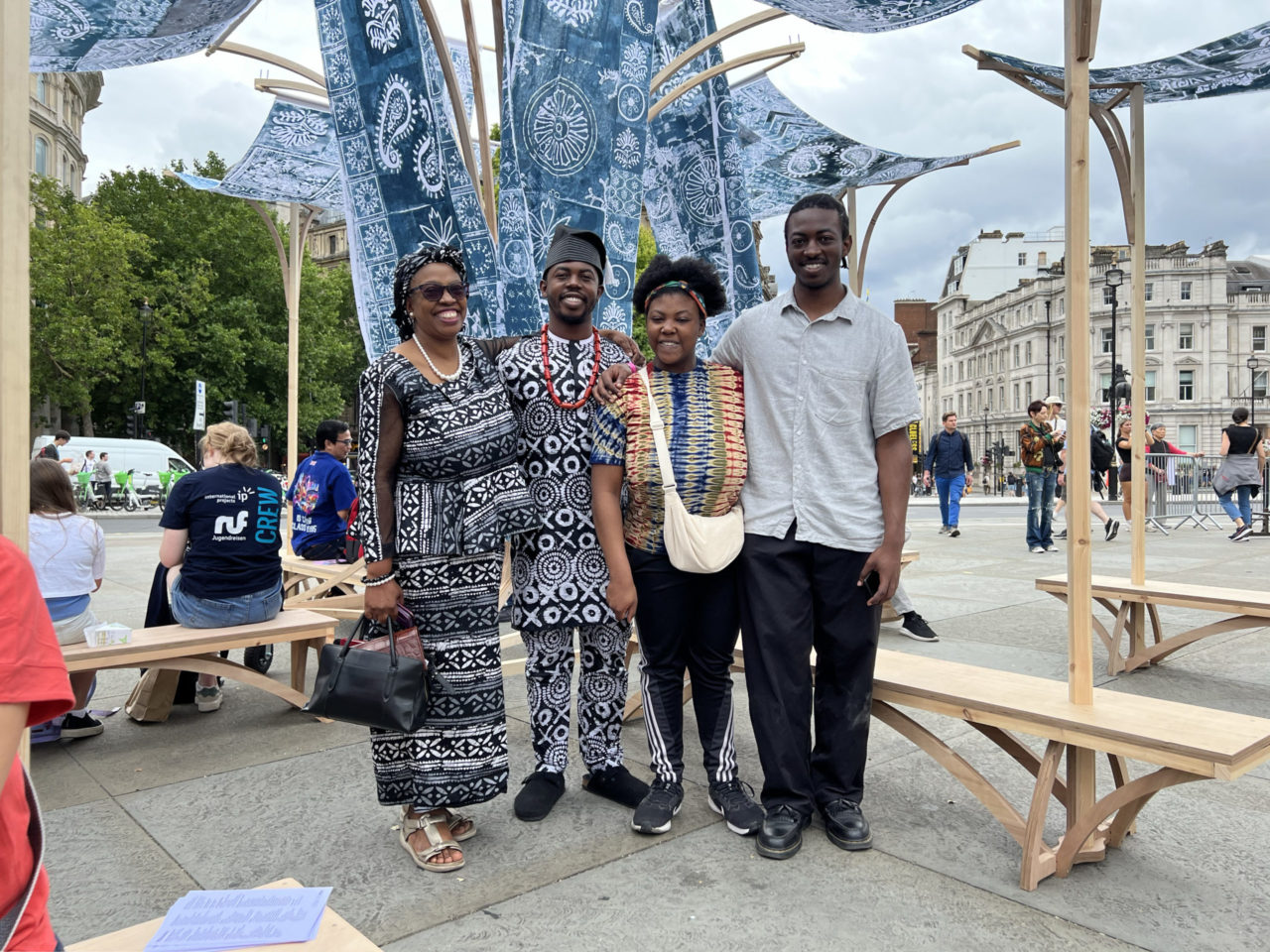
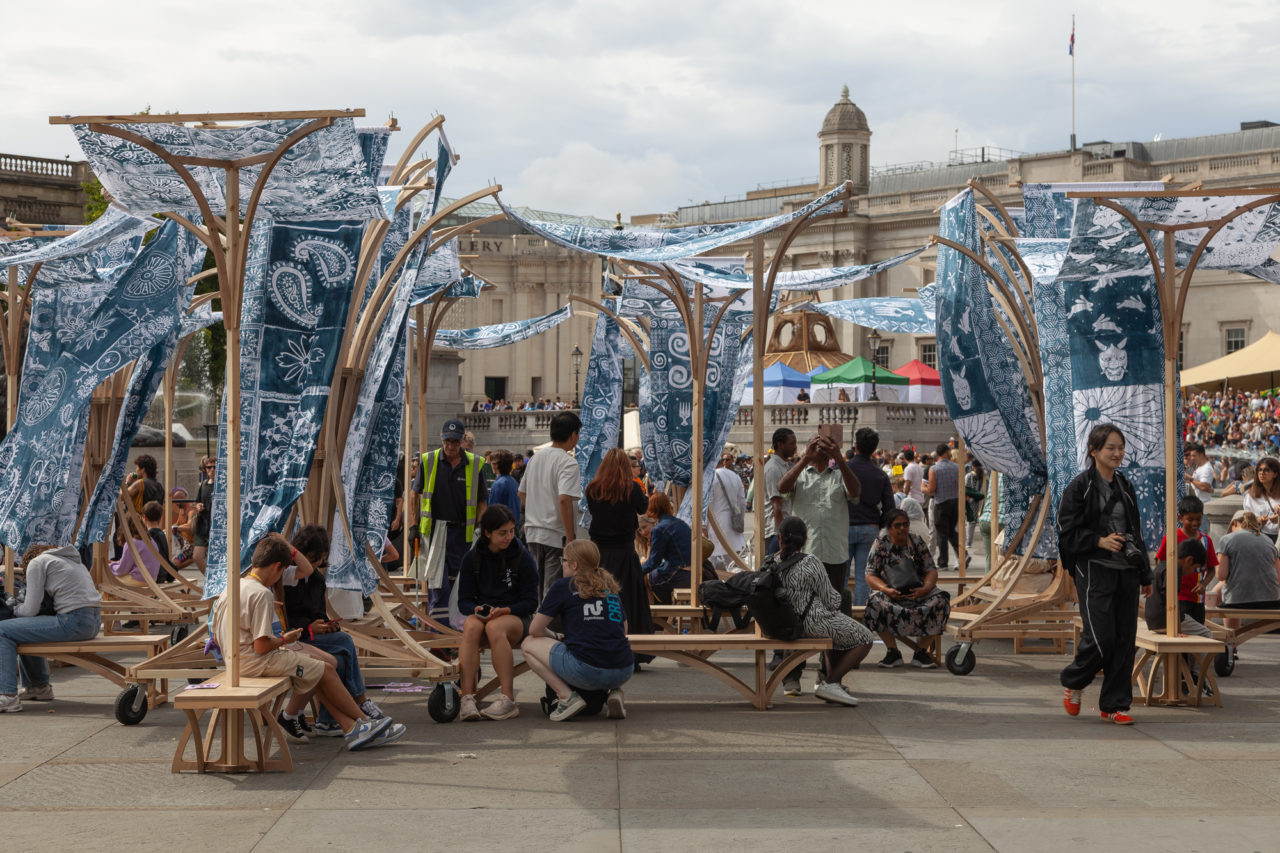
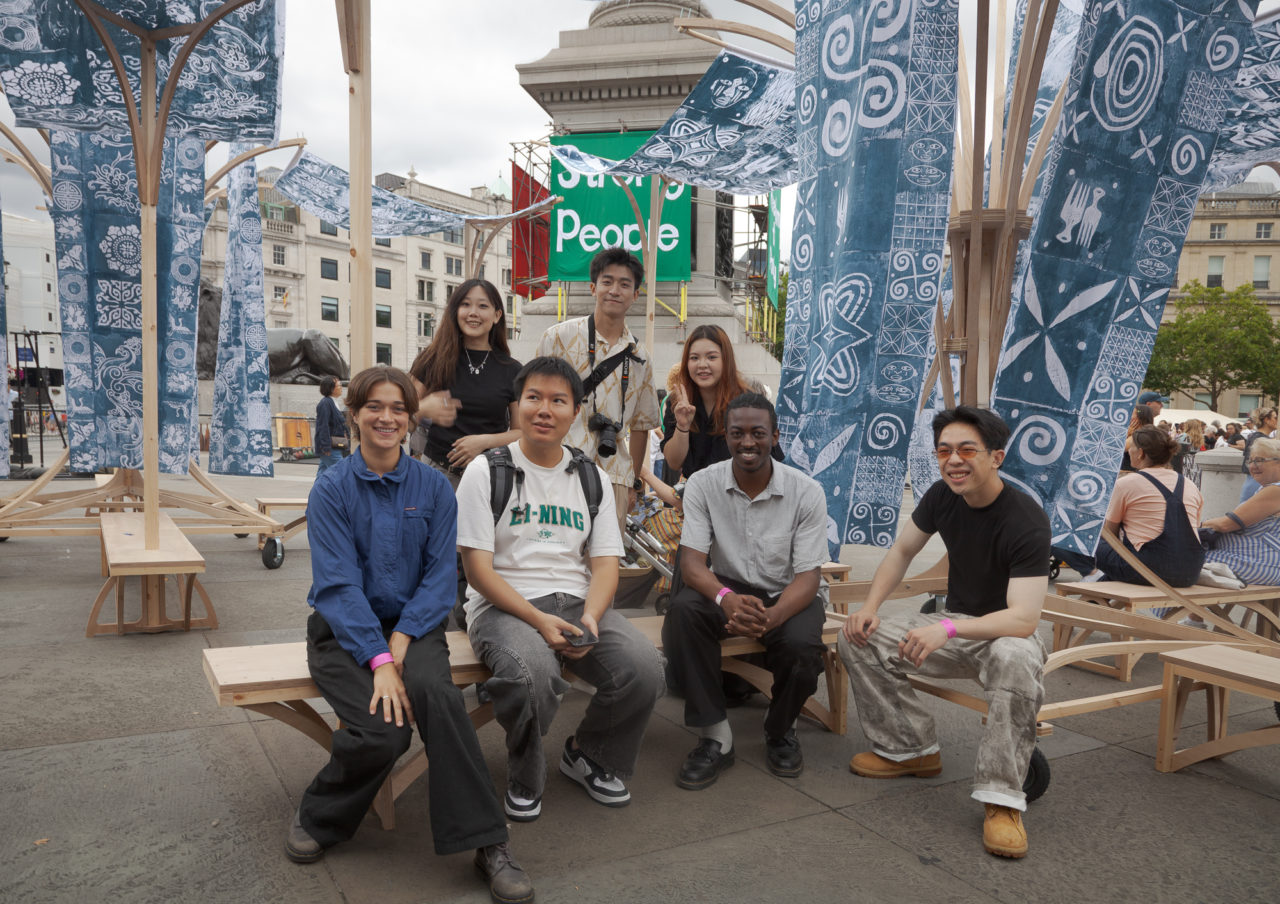
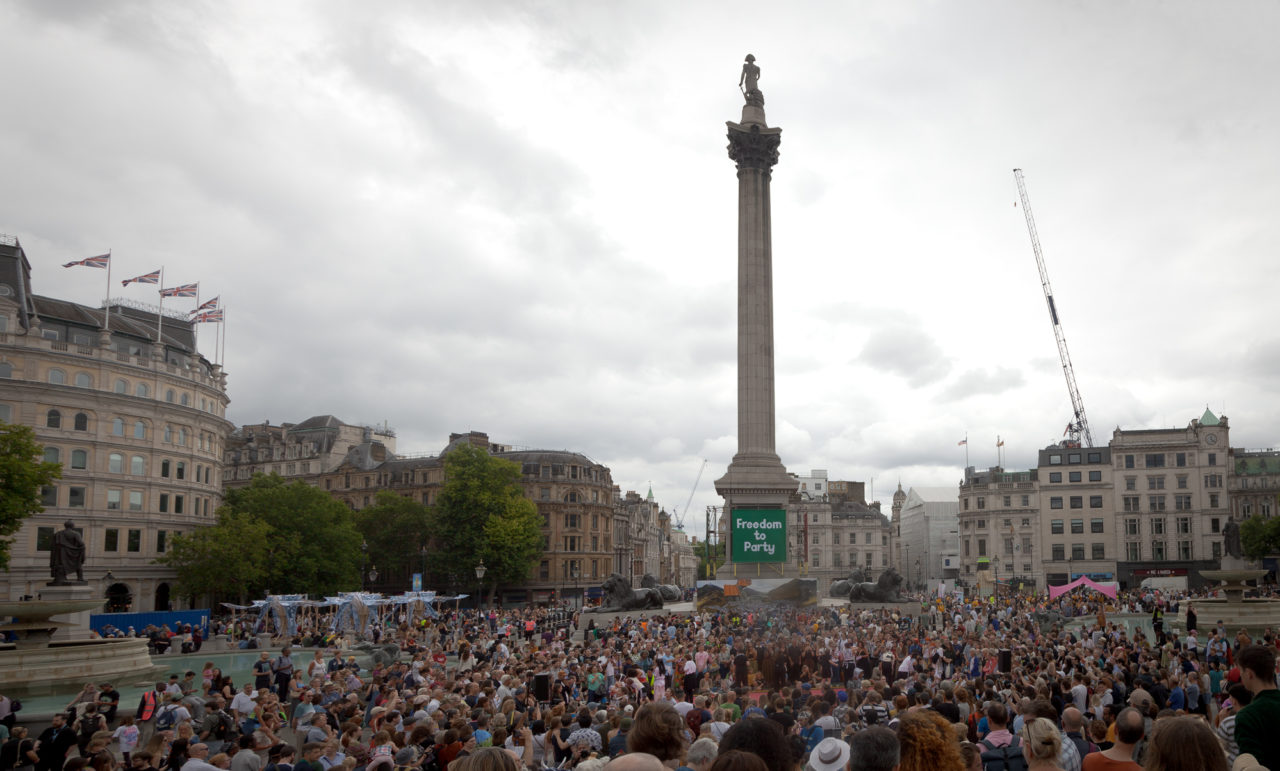
Bartlett students from Architecture BSc Unit 9 (taught by Mobile Studio Architects and Jessica In) and Design for Performance & Interaction MArch (taught by Jessica In and Parker Heyl) participate in a cross-programme collaboration as part of a major public performance art event on Saturday 26 July 2025. Conceived by artist Jeremy Deller, The Triumph of Art has taken in cities across the four corners of the UK – Derry, Dundee, Llandudno and Plymouth – and concludes in London as part of the National Gallery’s bicentenary celebrations, celebrating 200 years of its existence.
The Triumph of Art highlights festivals’ integral role in art, culture and civic life, and how art and artists can be catalysts of collaboration and joy. Saturday’s family-friendly event takes inspiration from folklore and rave history, combining built pavilions, installations, live music, performances, creative workshops and a tea party. It kicks off at 11:00 with a Bacchanalian procession, as revellers make their way from King Charles Street to Trafalgar Square.
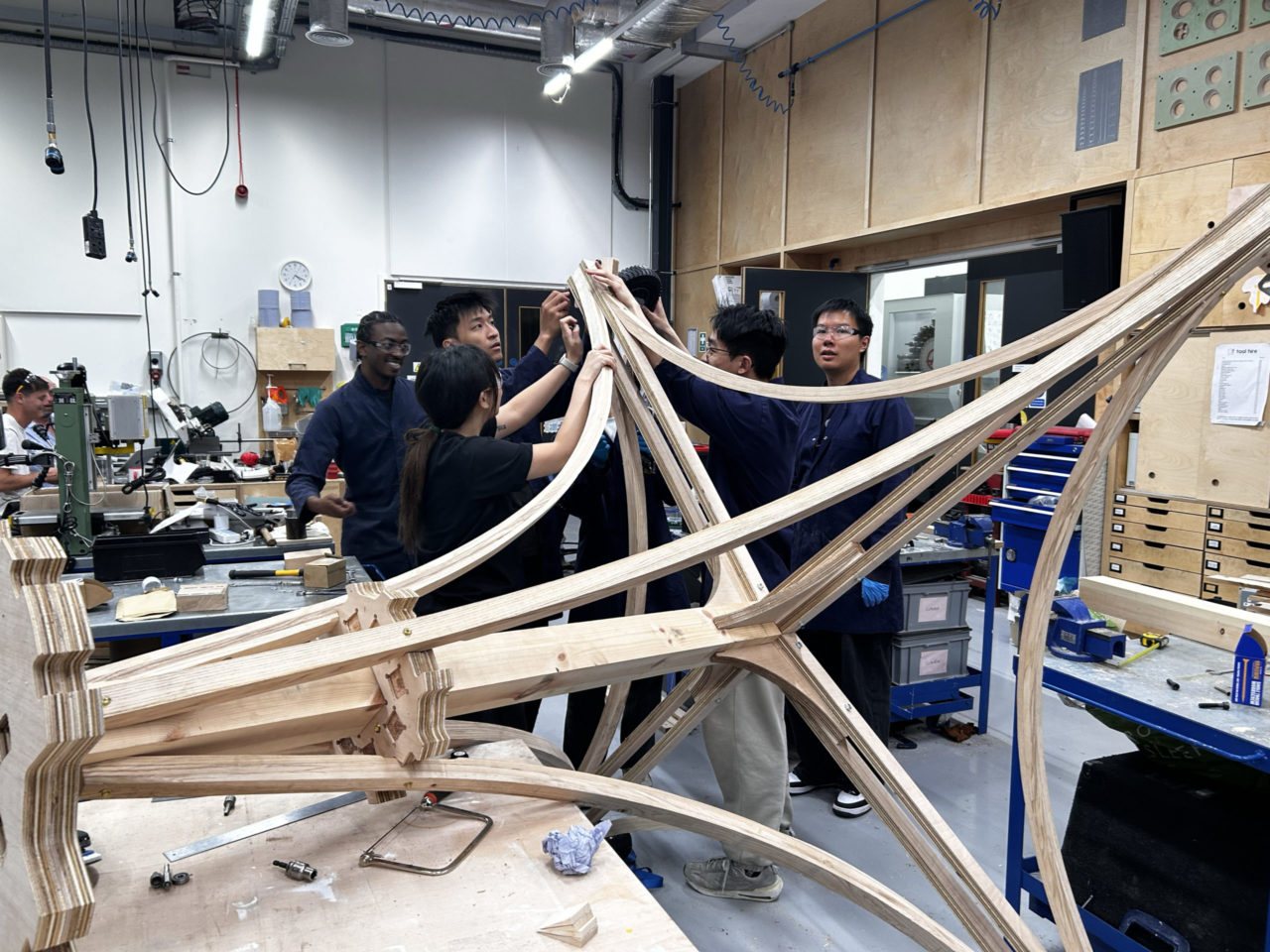
The ‘live project’ format gives students valuable exposure to industry practices; they design and fabricate their installation, ‘The Indigo Pavilion’, with support from the school’s B-made workshop, and funding from the National Gallery, and takes centre stage in the performance on Saturday. As part of the brief, they take part at client reviews and manage project budgets, with supervision from their design tutors.
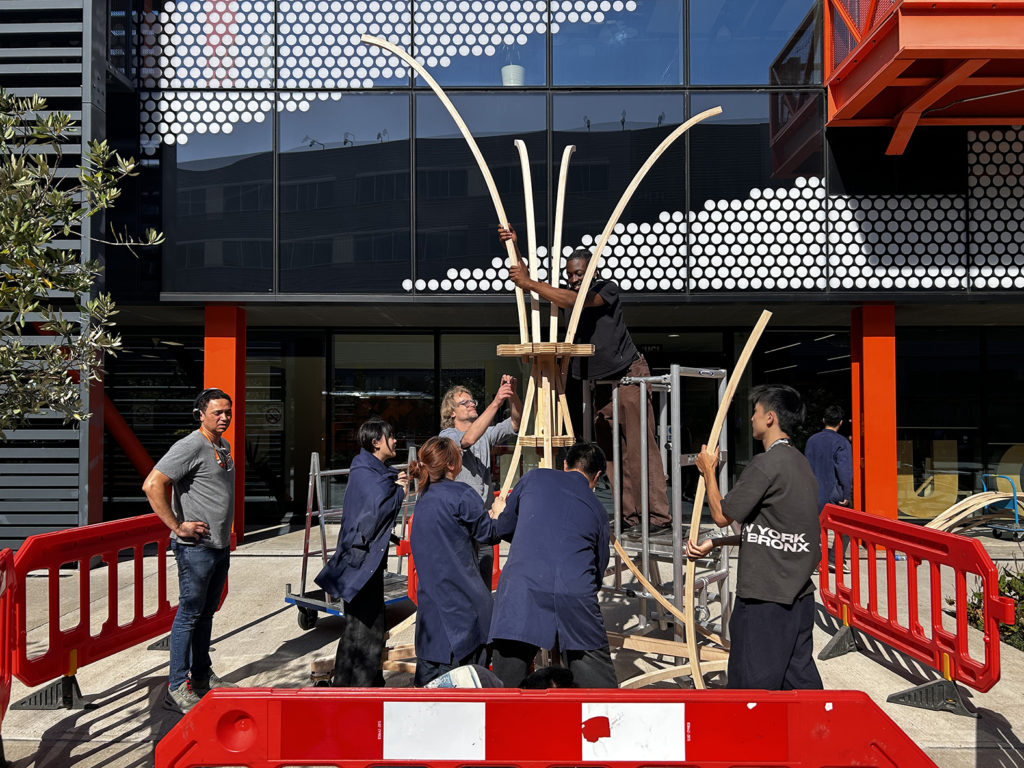
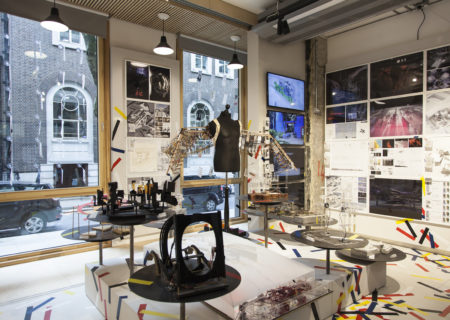
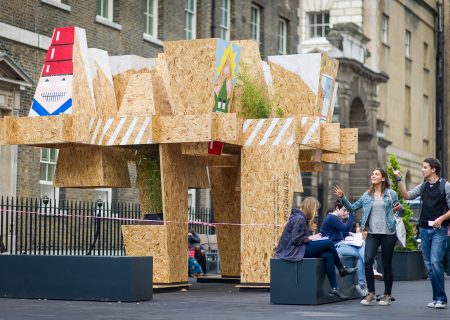
Prototype and fabrication by Bartlett students at UCL HereEast campus and workshop
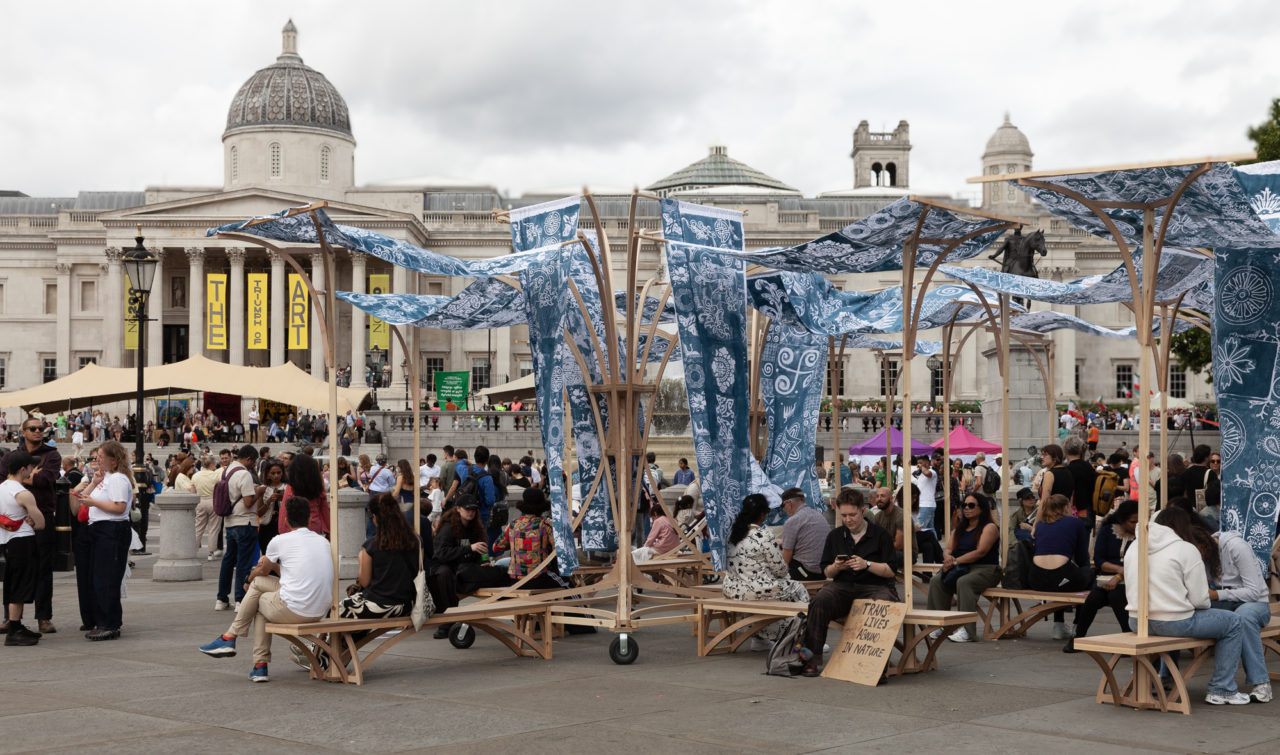
‘The Indigo Pavilion’ investigates the contested histories of Trafalgar Square and the National Gallery through the story of indigo, the valuable blue dye that played a significant role in British colonial history.
‘The Indigo Pavilion’ acknowledges the difficult place of indigo in the history of colonialism while celebrating its craft, specifically Adire, Ajrak/Kalamkari, Katazome and Nayin (indigo block or stencil printing traditions from Nigeria, India, Japan and China respectively, as personally represented by the participating students).
The Indigo Pavilion bought a quieter more reflective aesthetic to the day, it was practical, beautiful and also political in equal measure, a mobile hangout space.
Jeremy Deller, artist
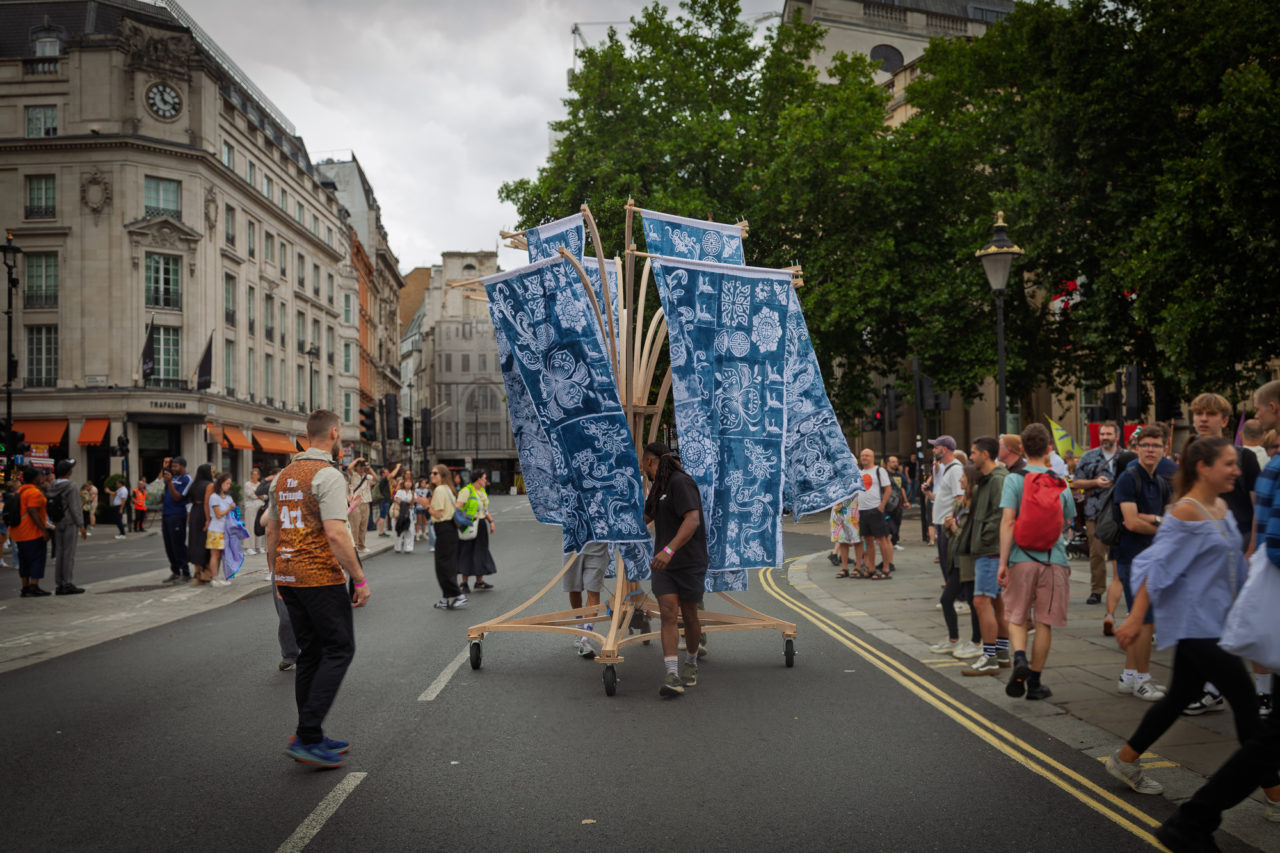
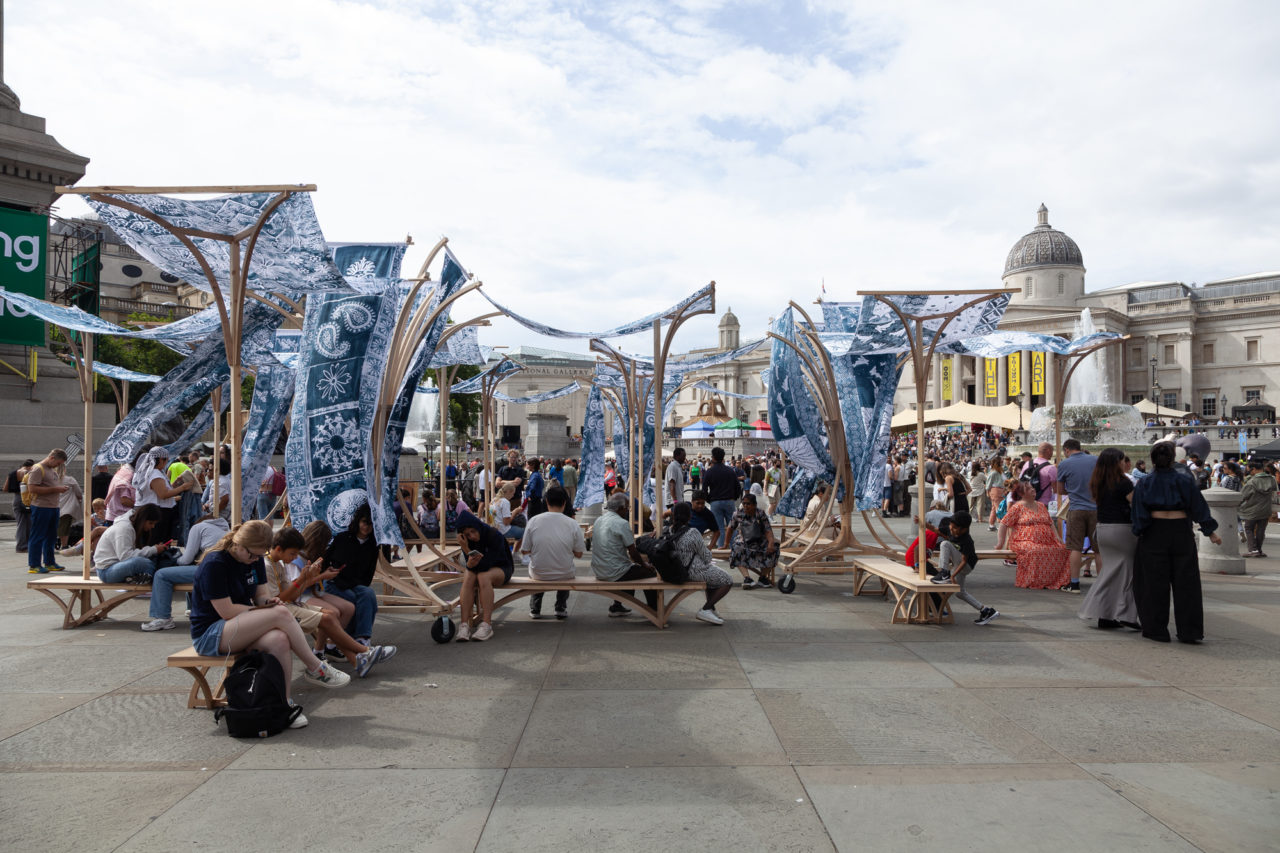
Displaying patterns interpreted from traditional motifs found in the different indigo crafts, the printed fabric is hung on gently a curved timber structure, enabling the fabric as procession device during the Whitehall parade, and then transforming into a shade structure on Trafalgar Square. The timber structure itself is hand crafted using a traditional steam bending technique, using locally sourced ash from fallen urban trees (London based timber supplier, Fallen & Felled).
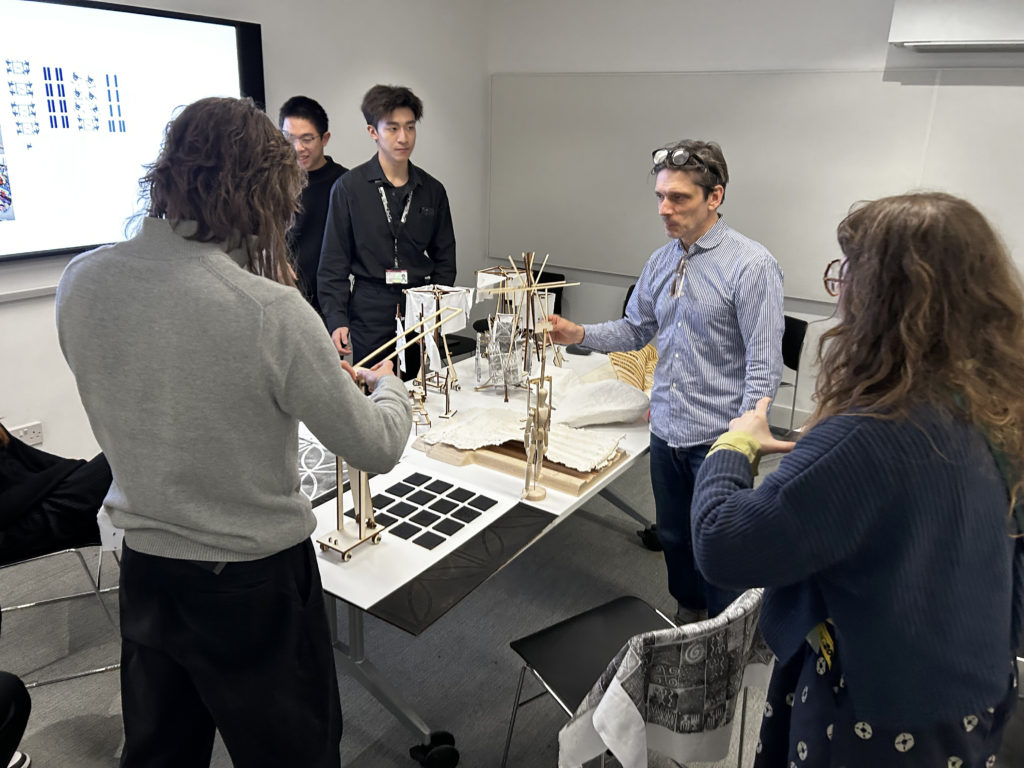
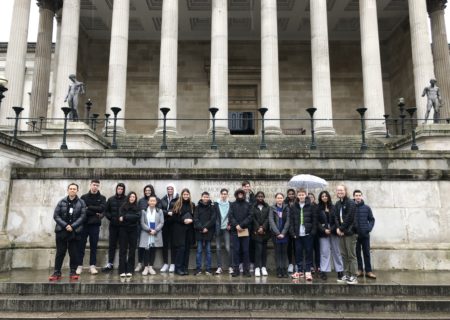
Client presentation at The National Gallery with artist Jeremy Deller and curator Emily Stone
Client
The National Gallery (NG200)
Location
Trafalgar Square, London
Curators
Daniel Hermann
Emily Stone
The Triumph of Art
Jeremy Deller
The Indigo Pavilion
Concept Design (students: Ethan Chen, Stan Luo, John Ogunyiluka)
Detail Design and Fabrication (students: Lane Finley, Kobe Guo, Ziwei Jiang, Guanjia Li, Cuihong Mao, Zhen Wang)
Funding
The National Gallery
Structural Engineering
ABA Engineering (Megan Morrison)
Events
LS Events (Alice Lockwood, Helen Mugridge)
Workshop
B-Made at UCL HereEast (Mark Burrows, Melis Van Den Berg, Hamish Veitch)
Tutors
Mobile Studio Architects
Jessica In
Parker Heyl
Special Thanks
The National Gallery (Grace Hailstone, Christine Riding, Alessandro Sorenti)
The Bartlett School of Architecture (Giles Nartey, Pranayita Myadam, Lauren Gillet, Fiona Zisch)
University College London (Refel Ismail)
Exhibition
London Festival of Architecture 2026